
Material Guide: Seaweed

When we think of seaweed, we usually picture sushi rolls, not summer dresses. But this fast-growing ocean plant is quietly making its way into the fashion world as a renewable, innovative fibre. Designers and researchers are increasingly turning to seaweed as a potential solution for reducing fashion’s environmental footprint.
What is seaweed fabric?
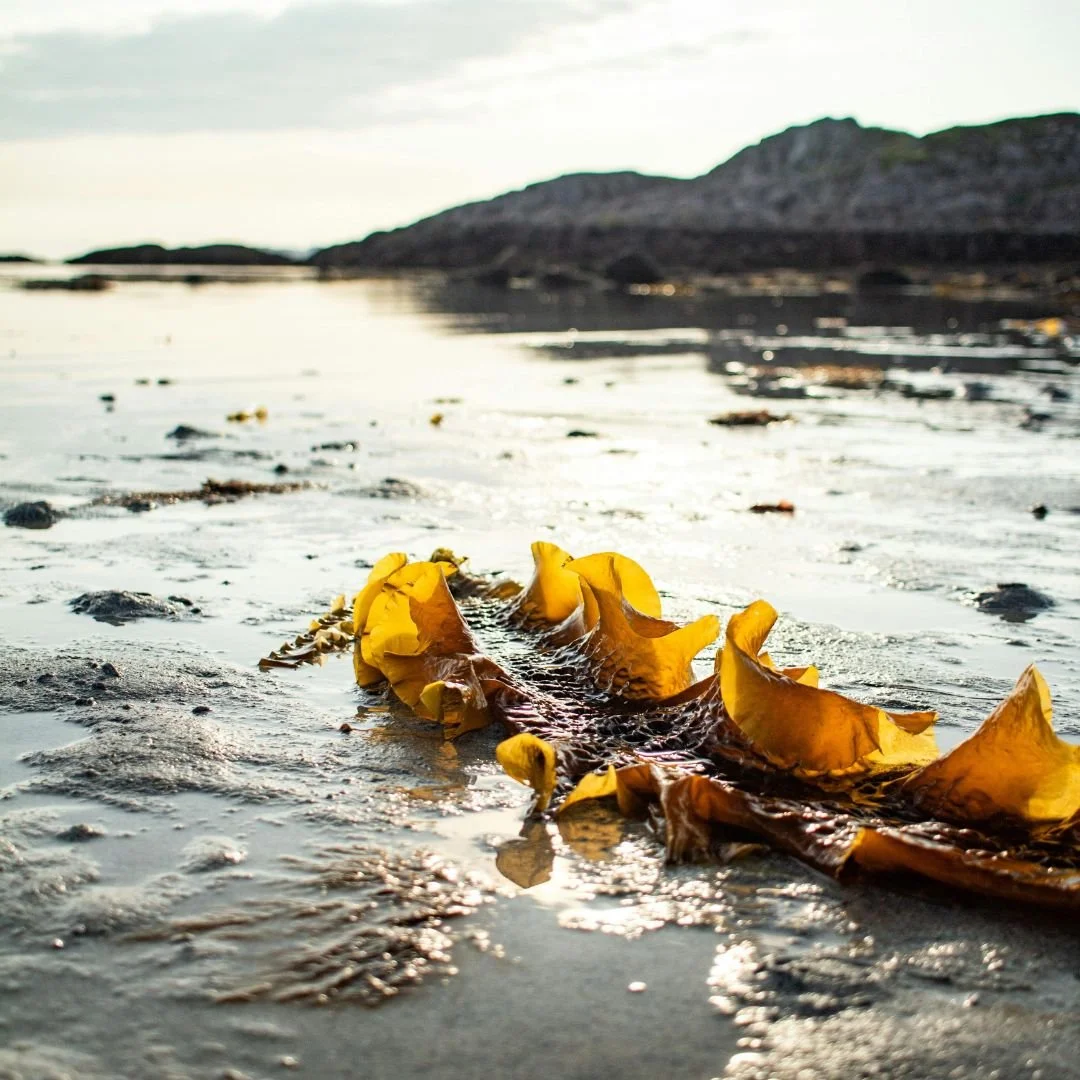
Seaweed fibres are created by harvesting the plant, drying and crushing it, and then mixing it with other fibres—most often Tencel or organic cotton. The most well-known version on the market is SeaCell™, a fibre developed by Smartfiber AG (Germany) in collaboration with Lenzing. It’s produced using a closed-loop lyocell process, where water and solvents are largely reused. Another newcomer is Kelsun™ by Keel Labs, recently highlighted by Stella McCartney.
The pros
Low resource use: Seaweed doesn’t require farmland, pesticides, or freshwater. It grows naturally in the ocean, often at rapid speeds of up to 50 cm per day (World Bank – The Seaweed Revolution).
Climate positive potential: Seaweed captures carbon dioxide as it grows and can improve ocean ecosystems by absorbing excess nutrients.
Comfort and care for skin: SeaCell™ is rich in minerals like magnesium and calcium, and some studies suggest these properties remain in the fibre, soothing the skin (Calida on SeaCell).
Biodegradable: When left untreated and not blended with synthetics, seaweed fabric is fully biodegradable (SeaCell factsheet, Smartfiber).
The cons
Not widely available: Seaweed textiles still make up a tiny fraction of the global fibre market. Most garments are blends, which complicates recyclability.
Processing impact: Even with a sustainable lyocell process, chemical treatment is required. Transparency and oversight are essential (Algae Foundation overview).
Durability: Pure seaweed fibres aren’t as strong as flax (linen) or hemp, so blends with cellulose are currently necessary for practical use.
Lifecycle Analysis: What the Data Shows
Recent LCA studies provide some concrete insights: for example, a study of a seaweed-based biorefinery in Ireland found that when producing sodium alginate (a derivative of seaweed) and biodegradable materials, the main environmental “hot-spots” are the fuel use and drying of the harvested seaweed biomass, as well as the yield and purification steps during extraction. Improvements in those areas could make seaweed-based materials more competitive with land-based systems. ResearchGate
Another review compiling LCAs for brown seaweed cultivation (“cradle-to-gate” stage) shows that while impacts vary a lot depending on location, scale, and processing method, seaweed cultivation generally has much lower land use, pesticide/fertiliser use, and freshwater consumption compared to many terrestrial crops. DIVA Portal
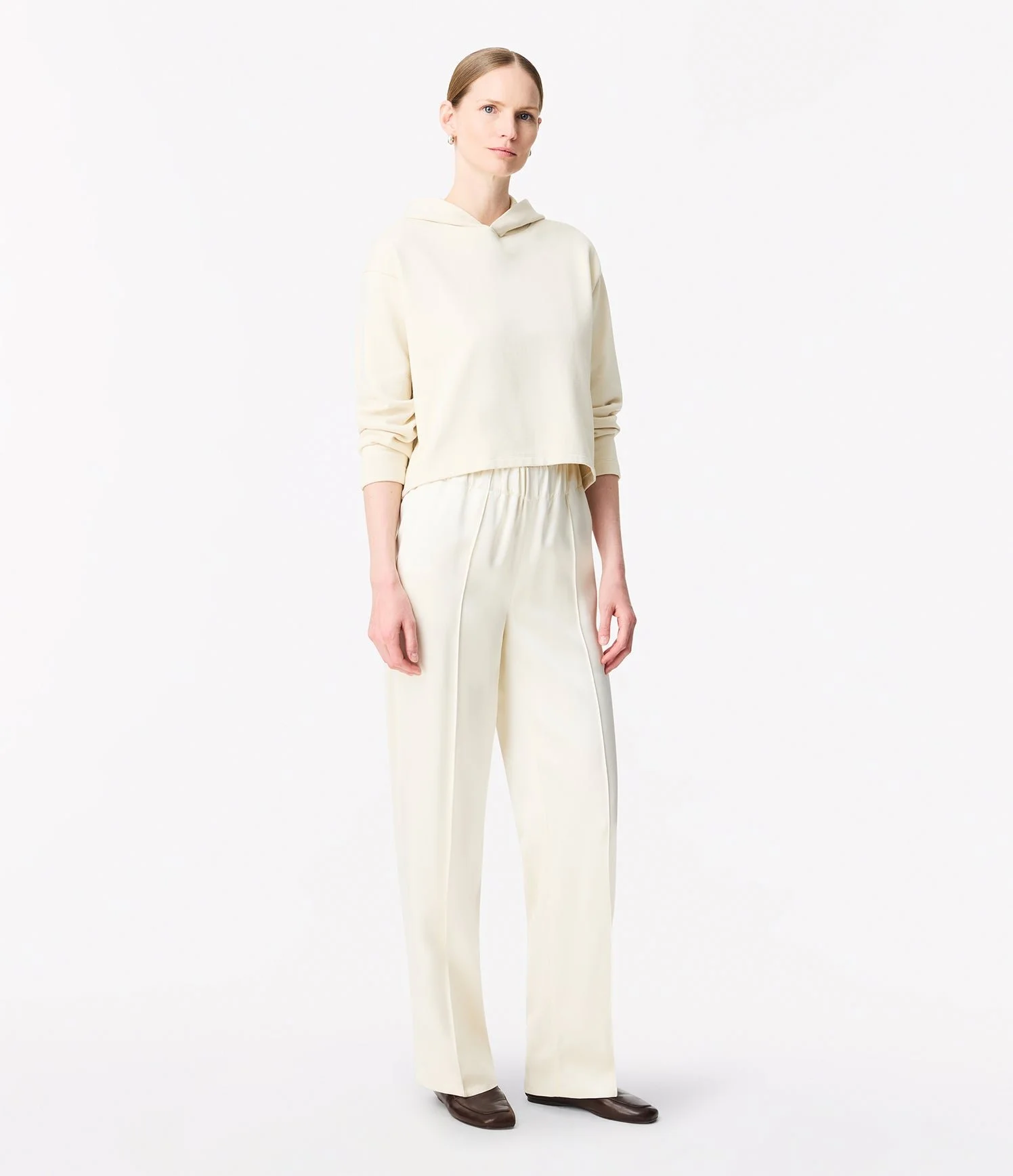
Photo: AnotherTomorrow
The bigger picture
From everyday basics to luxury experiments, seaweed fabrics are slowly appearing in fashion.
Stella McCartney introduced seaweed fibre (Kelsun™) in her Summer 2024 collection.
CALIDA uses SeaCell™ in underwear and loungewear.
H&M has collaborated with Keel Labs on bringing seaweed-based fabrics to the high street.
Another Tomorrow has several clothing items with Seacell in them!
Seaweed won’t replace cotton or linen overnight, but it represents an exciting step toward regenerative materials that work with nature rather than against it. By supporting brands that experiment with ocean-based fibres, we can help turn a niche idea into a sustainable staple.